
Braised Kimchi with Perilla Oil (Deulgireum Kimchi Jjim)
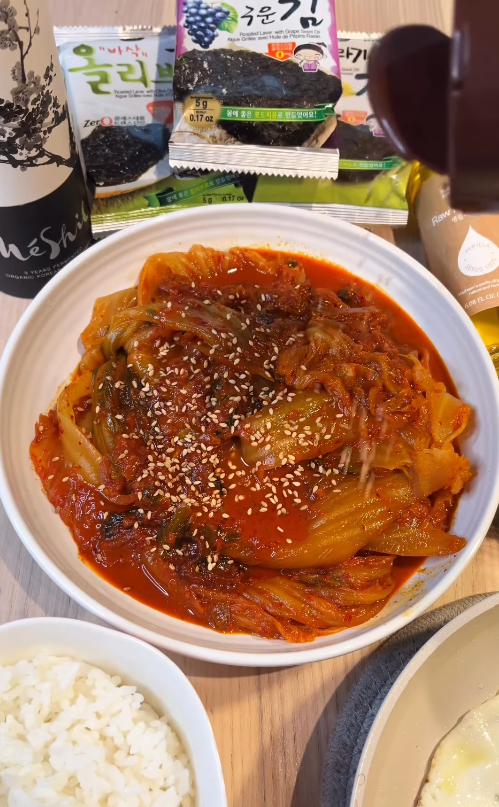

This braised kimchi is one of my favorite low-effort Korean comfort food recipes. With just a few ingredients, the kimchi slowly simmers until it’s incredibly soft, rich, and flavorful.
The combination of perilla oil (deulgireum), Korean plum extract (maesil-cheong), and rice-rinsing water (ssalddeumul) creates a surprisingly deep flavor despite the short ingredient list. The kimchi becomes tender and silky while soaking up all of the savory, nutty, and slightly sweet flavors.
Extra protein is definitely optional here. Pork belly would be so good, and mackerel is another popular option. But this version is still incredibly flavorful on its own, and I wanted to keep it simple with just a handful of ingredients.
I love serving it with warm rice, gim, and eggs for an easy, comforting meal.
Braised Kimchi with Perilla Oil (Deulgireum Kimchi Jjim)
Ingredients
Equipment
Method
- Prepare rice waterRinse rice as usual and reserve 1 cup of the water from the second rinse.
- AssemblePlace the kimchi into a large pot or deep pan. Add a small amount of kimchi juice from the container.Pour in the rice-rinsing water, perilla oil, and maesil-cheong.
- BraiseCover with a lid and bring to a gentle simmer over low-medium heat.Cook for about 40 minutes, turning the kimchi occasionally, until very tender and soft.
- ServeOnce the kimchi is tender, tear or cut it into bite-sized pieces if desired.Serve with warm rice, gim, and eggs.
Notes
Difficulty
Easy – Simple ingredients and minimal hands-on cooking.Storage
Refrigerator: Up to 5 days in an airtight container. Freezer: Up to 2 months. Tip: The flavor often becomes even better the next day.Tips
• If you don’t have rice-rinsing water (ssalddeumul), plain water can be substituted • Older, more fermented kimchi works especially well for this recipe • Turn the kimchi occasionally while cooking so it braises evenly • The kimchi should be tender enough to pull apart easily after braising. I usually tear it into bite-sized pieces instead of cutting it • Extra protein is definitely optional here. Pork belly would be so good, and mackerel is another popular option • This dish can be served as a side dish or as a simple meal with rice, gim, and eggs Tip: The flavor often becomes even better the next day.What is Rice-Rinsing Water (Ssalddeumul)?
Rice-rinsing water (ssalddeumul) is the water left over from rinsing rice before cooking. It’s commonly used in Korean soups and stews to add extra body and depth of flavor. For this recipe, I like using the water from the second rinse.If you liked this, you might also like:


